Separating Cabinet Power, Dispenser Power and Site Power in a Split-Charger Offer
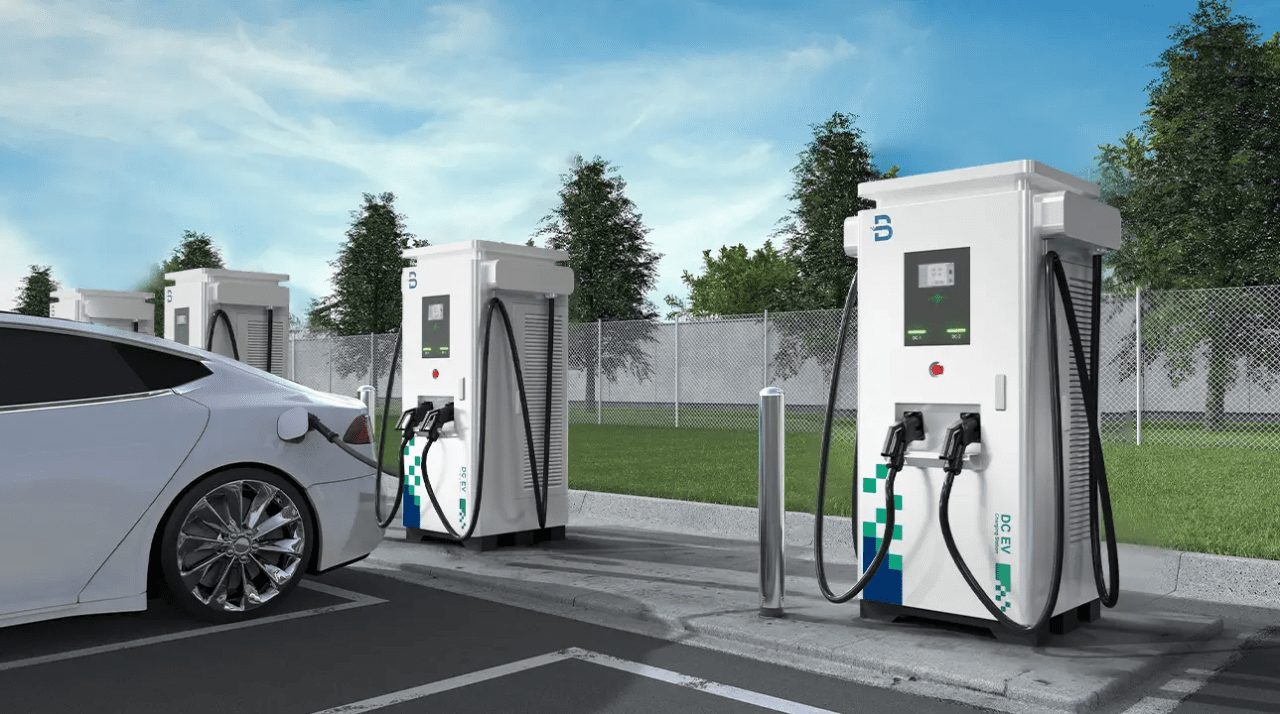
Read a split-charger quotation as a chain of limits, not one large power number. The site connection, power cabinet, dispenser and individual connector can each restrict delivery. The useful purchasing question is how much direct current (DC) charging the proposed arrangement can provide to the intended vehicles at the same time.
Draw the four boundaries
In a typical split charger, the power cabinet converts incoming alternating current (AC) to direct current (DC), while a separate dispenser provides the driver-facing connection. Trace the limits along this chain: site supply → power cabinet → dispenser → connector and vehicle. Use the manufacturer's drawings for the ordered arrangement.
At the site boundary, record the agreed import limit and the allowance left for charging after other loads. At the cabinet, identify the ordered conversion capacity. At each dispenser, identify its total output limit. At the connector, check the applicable current, voltage and cooling conditions.
Write the measurement point beside every figure. An alternating current (AC) input figure and a DC output figure describe different boundaries. A designer must also account for the equipment's input requirements and other site demand.
Separate a product range from an ordered system
A range heading can describe several configurations. It is not necessarily the specification of the cabinet in the quotation.
The EVB DC charging range includes split equipment alongside wall-mounted, floor-mounted and battery-integrated families. For a split-system quotation, ask the supplier to identify cabinet capacity, each terminal's limit and the supported simultaneous output as separate entries for the ordered configuration.
Ask the supplier to mark the exact cabinet and dispenser configuration on the offer. If an option changes cable cooling or connector capability, make the selected option visible. Avoid an order line that names only the broad product family.
Ask for allocation under simultaneous demand
A single-vehicle demonstration cannot show how a shared cabinet divides power. Request several proposed operating cases: one vehicle, two high-demand vehicles, a mixed group and a group approaching the site's charging allowance.
For each case, the response should identify the cabinet's total allocation and the limit applied to each active connector. It should also state whether unused capacity can move between dispensers and what restrictions govern that movement.
Vehicle acceptance remains part of the result. A car that requests less power does not demonstrate the connector's full capability. Equally, a high cabinet rating does not overcome a vehicle's voltage, current or charging limitations.
Put the quotation into a comparison sheet
Use one row for each offered configuration, with the following fields:
· Site: agreed import limit, other-load allowance and charging control boundary.
· Cabinet: exact ordered model, total output and input requirements.
· Dispensers: quantity, identifiers and individual total-output limits.
· Connectors: type, applicable ratings and selected cooling configuration.
· Shared operation: allocation rules and stated simultaneous-use cases.
· Evidence: document revision, assumptions and the person supplying the answer.
Leave unanswered cells as questions. Do not fill them by multiplying the cabinet's maximum by the connector count. Multiple cables can offer convenient access without multiplying the system's conversion capacity.
Decide which limit matters commercially
Consider a hypothetical depot where several vehicles arrive together but only two need early departure. A shared cabinet may suit that pattern if its allocation behaviour supports the required schedule. Another site may value a higher minimum allocation across several occupied bays. The right comparison depends on the operating requirement.
Ask for an allocation schedule against those needs, then have the electrical designer check the connection boundary. If the offer cannot identify which limit controls each case, the power description is not yet detailed enough to compare.
The purchasing record should end with an agreed configuration and a demonstration plan. It should not end with a promise that the headline maximum will appear at every vehicle. That distinction makes price comparisons clearer and gives commissioning a specific arrangement to verify.