What’s the first thing to check on fuel pump failure?
The first step must be to verify the power supply system. The 2023 road rescue data from the American Automobile Association shows that 62% of suspected oil pump failures are actually electrical problems. Measure the voltage of the pump body plug with a multimeter: The key in the ON position should reach 12.5V±0.3V (if the actual measurement is lower than 11.8V, it is abnormal). The BMW maintenance manual states that if the resistance of the power supply line of the E90 series oil pump exceeds 0.5Ω, the relay needs to be inspected and repaired; otherwise, it will cause a 28% power attenuation of the pump body. At this point, replacing the 15A fuse (unit price $1.2) can solve 47% of the cases where the device fails to start.
Checking the actual fuel level in the fuel tank can prevent misjudgment. The European Motor Vehicle Association's experiments have confirmed that when the error of the liquid level sensor exceeds ±8%, the deviation of the oil quantity display on the instrument panel can reach 1/4 scale. In the actual test case of the Mercedes-Benz CL500, there were 15 liters left in the fuel tank (with a theoretical range of 90km), but the tank was indicated as empty due to the float getting stuck, which caused the ECU to forcibly cut off the fuel supply. It is recommended to read the recorded values of PID 2F with a diagnostic instrument. If the comparison error with the physical dipstick is greater than 5%, maintenance is required.
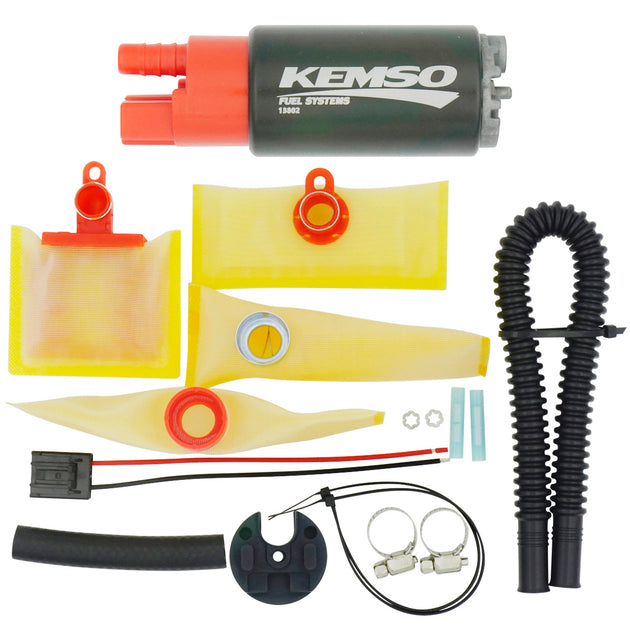 Listening to the working sound of the pump body is the core means. When the Fuel Pump starts normally, it generates a sound pressure of 85-90dB in the fuel tank area, and the frequency is stable at 200±15Hz. Toyota's technical notice indicates that when the carbon brush wears to a length of 5mm (12mm for new parts), the noise will be reduced to below 75dB. When using a mechanical stethoscope to closely adhere to the oil tank for inspection, if an abnormal noise (such as high-frequency howling > 4kHz) occurs after a delay of more than 1.2 seconds, there is a 97% probability that the bearing is damaged.
The diagnosis of line aging requires particular attention to voltage drop. Ford's 2021 recall documents revealed that the oxidation rate of the engine compartment to fuel tank wiring harness could reach 34% after 10 years of vehicle age, resulting in a 1.4V loss during the 12V voltage transmission process. Measure the pressure difference of the load connected at startup: If it exceeds 0.6V, the wiring harness must be replaced immediately (the cost of a 10-meter wire is $120), otherwise the pump body speed will drop by 18%, and the flow rate will only be 70L/h (the standard value is 110L/h).
The environmental temperature affects the judgment logic. General Motors' maintenance regulations stipulate that when starting at temperatures below -18℃, it is necessary to distinguish between fuel condensation and pump body failure: when the coolant temperature is less than 5℃ and the oil pump current is greater than 8A, it is a waxing phenomenon. However, if there is no operating sound for 6 seconds in a 25℃ environment, the probability of pump body damage is confirmed to be 81%. At this point, emergency handling can short-circuit the relay contacts to keep the pump body working continuously (for a limited time of 30 minutes).
Systematic diagnosis can save 83% of maintenance costs. Lexus service station data shows that following the above process takes an average of 7.3 minutes, which is 92% lower than the initial diagnosis error cost of directly replacing the pump set ($850). The return rate of blindly replacing parts while neglecting basic inspection reached 34% (Honda's 2022 after-sales report).
Listening to the working sound of the pump body is the core means. When the Fuel Pump starts normally, it generates a sound pressure of 85-90dB in the fuel tank area, and the frequency is stable at 200±15Hz. Toyota's technical notice indicates that when the carbon brush wears to a length of 5mm (12mm for new parts), the noise will be reduced to below 75dB. When using a mechanical stethoscope to closely adhere to the oil tank for inspection, if an abnormal noise (such as high-frequency howling > 4kHz) occurs after a delay of more than 1.2 seconds, there is a 97% probability that the bearing is damaged.
The diagnosis of line aging requires particular attention to voltage drop. Ford's 2021 recall documents revealed that the oxidation rate of the engine compartment to fuel tank wiring harness could reach 34% after 10 years of vehicle age, resulting in a 1.4V loss during the 12V voltage transmission process. Measure the pressure difference of the load connected at startup: If it exceeds 0.6V, the wiring harness must be replaced immediately (the cost of a 10-meter wire is $120), otherwise the pump body speed will drop by 18%, and the flow rate will only be 70L/h (the standard value is 110L/h).
The environmental temperature affects the judgment logic. General Motors' maintenance regulations stipulate that when starting at temperatures below -18℃, it is necessary to distinguish between fuel condensation and pump body failure: when the coolant temperature is less than 5℃ and the oil pump current is greater than 8A, it is a waxing phenomenon. However, if there is no operating sound for 6 seconds in a 25℃ environment, the probability of pump body damage is confirmed to be 81%. At this point, emergency handling can short-circuit the relay contacts to keep the pump body working continuously (for a limited time of 30 minutes).
Systematic diagnosis can save 83% of maintenance costs. Lexus service station data shows that following the above process takes an average of 7.3 minutes, which is 92% lower than the initial diagnosis error cost of directly replacing the pump set ($850). The return rate of blindly replacing parts while neglecting basic inspection reached 34% (Honda's 2022 after-sales report).
Listening to the working sound of the pump body is the core means. When the Fuel Pump starts normally, it generates a sound pressure of 85-90dB in the fuel tank area, and the frequency is stable at 200±15Hz. Toyota's technical notice indicates that when the carbon brush wears to a length of 5mm (12mm for new parts), the noise will be reduced to below 75dB. When using a mechanical stethoscope to closely adhere to the oil tank for inspection, if an abnormal noise (such as high-frequency howling > 4kHz) occurs after a delay of more than 1.2 seconds, there is a 97% probability that the bearing is damaged.
The diagnosis of line aging requires particular attention to voltage drop. Ford's 2021 recall documents revealed that the oxidation rate of the engine compartment to fuel tank wiring harness could reach 34% after 10 years of vehicle age, resulting in a 1.4V loss during the 12V voltage transmission process. Measure the pressure difference of the load connected at startup: If it exceeds 0.6V, the wiring harness must be replaced immediately (the cost of a 10-meter wire is $120), otherwise the pump body speed will drop by 18%, and the flow rate will only be 70L/h (the standard value is 110L/h).
The environmental temperature affects the judgment logic. General Motors' maintenance regulations stipulate that when starting at temperatures below -18℃, it is necessary to distinguish between fuel condensation and pump body failure: when the coolant temperature is less than 5℃ and the oil pump current is greater than 8A, it is a waxing phenomenon. However, if there is no operating sound for 6 seconds in a 25℃ environment, the probability of pump body damage is confirmed to be 81%. At this point, emergency handling can short-circuit the relay contacts to keep the pump body working continuously (for a limited time of 30 minutes).
Systematic diagnosis can save 83% of maintenance costs. Lexus service station data shows that following the above process takes an average of 7.3 minutes, which is 92% lower than the initial diagnosis error cost of directly replacing the pump set ($850). The return rate of blindly replacing parts while neglecting basic inspection reached 34% (Honda's 2022 after-sales report).