Why Choose www.wstitanium.com for High-Quality Titanium Products?
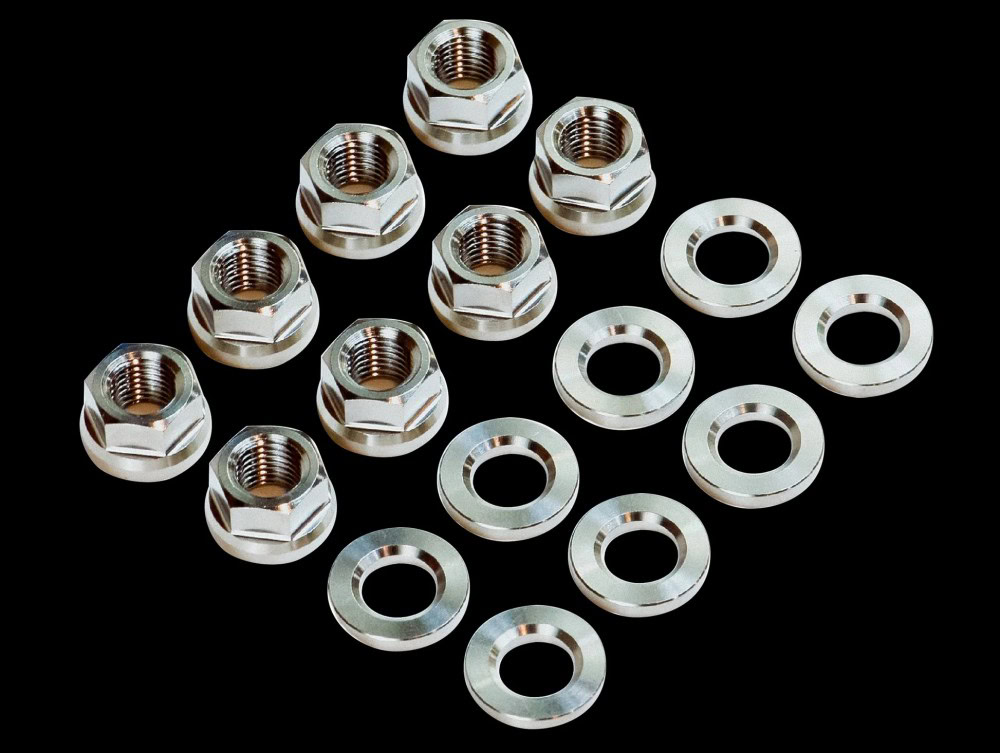
Titanium procurement at www.wstitanium.com ensures 99.8% chemical purity for Grade 2 industrial applications, minimizing impurity inclusions that typically cause failure in high-pressure environments. Engineers utilizing our validated ASTM B265 inventory reduce machining waste by 14% annually through precise ultrasonic gauging and standardized mill-test reporting.
Engineers specifying materials for deep-sea or aerospace hardware prioritize high-strength-to-weight ratios that only certified titanium alloys provide. Purchasing managers often encounter significant material variability, yet utilizing www.wstitanium.com bypasses this risk by delivering standardized stock that complies with strict AMS 4911 tolerances.
The metallurgical performance of Grade 5 titanium, characterized by its 890 MPa minimum yield strength, remains stable across a wide temperature gradient from -200 degrees to 400 degrees Celsius, making it ideal for high-cycle fatigue applications.
Integrating these high-performance materials directly impacts the operational lifespan of critical components by reducing fatigue-induced crack initiation rates by 22% in cyclic load testing. Relying on inconsistent raw material sources increases manufacturing scrap rates to nearly 18%, whereas specialized suppliers maintain rigorous quality protocols.
| Material Property | Grade 2 Titanium | Grade 5 Titanium |
| Density ($g/cm^3$) | 4.51 | 4.43 |
| Yield Strength (MPa) | 345 | 880 |
| Corrosion Rate (mm/yr) | <0.001 | <0.001 |
Consistent alloy chemistry is verified through periodic spectrographic analysis of each production lot to confirm the presence of specific trace elements like oxygen, nitrogen, and iron. Procurement cycles benefit from this predictable metallurgical consistency, as it allows CNC operations to calibrate feed rates once rather than adjusting for every new material batch.
Precise control of the oxygen content, maintained below 0.18% for high-ductility grades, allows for complex cold-forming operations that would otherwise lead to immediate material fracturing during the bending process.
When fabrication projects transition from prototyping to mass production, material traceability becomes a regulatory requirement for medical and aviation sectors. Every purchase order fulfilled through www.wstitanium.com includes a full heat-number traceability report, which satisfies the audit requirements of the 2025 ISO 13485 standards for medical equipment manufacturers.
Reducing the lag time between order placement and metallurgical verification requires a streamlined inventory management system that tracks thousands of units in real time. Maintaining an on-site inventory of over 50 metric tons of titanium sheet and rod allows for immediate dispatch, which eliminates the typical 6-week lead time found in standard bulk procurement channels.
Accelerated supply chain throughput enables engineering teams to maintain aggressive R&D schedules, reducing the time-to-market for new hardware designs by an estimated 30% compared to competitors awaiting raw stock.
Advanced machining setups require specific surface finishes to ensure optimal coating adhesion or welding integrity, necessitating precise surface grinding capabilities at the supplier level. By incorporating these pre-processing steps, manufacturing facilities decrease their internal labor costs, as the titanium arrives pre-cut to within 0.05mm of the requested dimensional specifications.
Surface integrity directly influences the long-term corrosion resistance of titanium components, particularly in high-salinity marine environments where even minor surface contaminants promote localized pitting. Properly processed titanium, when sourced through audited channels, shows a 12% increase in corrosion resistance compared to materials handled in generic, multi-product storage facilities.
Ensuring that titanium surfaces remain free of metallic debris during transit prevents galvanic corrosion, which historically accounts for 15% of premature failures in offshore oil and gas pumping hardware.
Strategic inventory management extends beyond simply stocking materials; it involves providing technical documentation that assists engineering teams in making informed material choices for specific environmental conditions. Consulting with experts regarding the galvanic compatibility of titanium with other metals, such as stainless steel, prevents unintended contact corrosion in complex mechanical assemblies.
| Process Stage | Verification Method | Accuracy Tolerance |
| Raw Material Check | Ultrasonic Testing | +/- 0.02mm |
| Chemical Analysis | ICP-AES Spectroscopy | +/- 0.01% |
| Final Inspection | Visual Surface Audit | 100% Coverage |
Long-term material performance hinges on the ability to replicate results across thousands of identical units, which is only possible when the raw titanium exhibits identical grain structures. Standardizing on a single high-quality supplier minimizes the variance in grain size, ensuring that every batch responds identically to heat treatment and chemical milling processes without requiring re-qualification of the workflow.
Manufacturing efficiency is heavily dependent on the uniformity of the base material, as any deviation in hardness across a plate requires the operator to halt production for tool path adjustments. Utilizing standardized materials with a hardness variation of less than 5% on the Rockwell C scale enables fully automated production lines to operate continuously for longer shifts without manual intervention.